Leeds is a recognised hub for innovation and emerging technologies, finding its strengths in the city region’s collaborative culture, with academia, industry and the public sector working side by side to tackle big challenges.
Nexus, aptly based at the University of Leeds, plays a key role in this ecosystem by connecting pioneering research with real-world commercial applications. One area where this collaboration is having a transformative impact is in the development of digital twins – read on to discover more about this technology and what it means for Nexus and Leeds.
A digital twin is a dynamic digital model of an object or system, whether that be a product, a building or an entire city. These models are powered by real-time data, allowing for continuous monitoring, analysis and adjustment, mirroring real-world operations.
Essentially, it’s a tool that takes data from the real world, so that users can analyse it and use it to make better decisions that impact both real life and the digital representation.
Digital twins are often confused with simulations – so what’s the difference?
Simulations can be viewed as:
Digital twins, on the other hand:
The decision between a simulation and a digital twin is down to the user’s needs, as each offers something different.
Digital twins are used across a wide range of industries, from aerospace and automotive to healthcare and city planning, because they help organisations better understand, test and improve what they do.
They bring a whole host of benefits, including:
In the context of smart cities – urban areas that utilise technology and data to improve the efficiency of city operations – digital twins can integrate infrastructure, transport, energy and environmental systems to help enhance the quality of life of their residents.
That said, implementing digital twins isn’t without its challenges. Ensuring data quality and managing privacy and sustainability concerns are all hurdles that need to be addressed.
At Nexus, the vision of smart cities is taking shape. Smart Cities Lead and Data and Insights Manager, Dennis Dokter, is heading up a project that combines cutting-edge technology, rigorous research and real-world application to explore how we can use data to shape better places to live and work.
Let’s take a closer look at two major digital twin projects currently underway at Nexus:
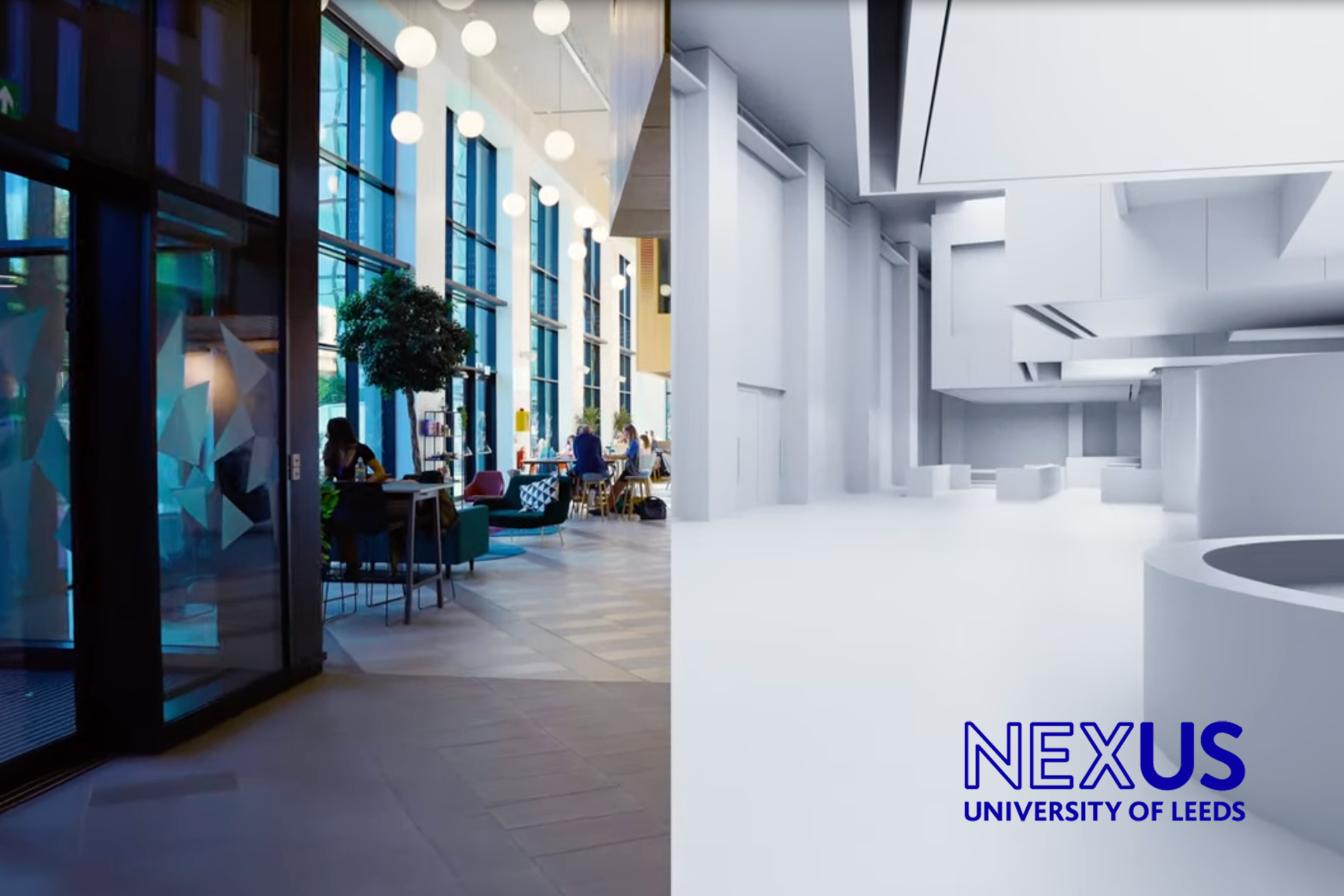
The Nexus business lounge itself is a living demonstration of digital twin technology. A digital twin of the facility provides a real-time operational model of the innovation centre, integrating data on energy usage, room bookings, space utilisation, environmental controls and more. This creates a central Data Space that decision-makers can use as a single point of reference.
The benefits are tangible: more efficient building management, reduced maintenance costs and predictive insights that help streamline operations. For example, the system can track how coffee consumption changes depending on which beans are used, helping choose the most economical option while also enhancing the customer experience.
Planned for official launch in September, the Nexus business lounge digital twin demonstrates how real-time data can drive sustainability, efficiency and smarter working. It forms part of the global Digital Twin Consortium (DTC) Testbed Program, which provides members with a collaborative environment to develop, test, validate and implement digital twin systems. It serves as a case study for digital twins, allowing us to see how we can make digital twins and how they can work.
Alongside hosting a DTC Testbed, Nexus is also positioning itself as a testbed in its own right, helping companies explore, test and scale digital twin solutions. This initiative links technological readiness with societal readiness, ensuring innovations are tested not only for functionality but also for their wider impact.
The Nexus digital twin testbed will enable companies to de-risk their innovations and bring them to market more effectively. This technology is particularly valuable for industries that demand rigorous testing, such as autonomous vehicles for example, before new technologies can be deployed at scale.
A key milestone for Nexus Smart Cities is the planned launch of STRIDE (Social and Technology Readiness Integration via Digital Evaluation) in November. This tool will give Nexus-based startups a structured way to evaluate and showcase their readiness, helping accelerate the journey from early-stage development to market adoption.
These projects aren’t just exciting tech demos, they’re a glimpse into the future of how cities like Leeds can operate.
This work is reinforcing Leeds’ status as a leader in healthtech, data science and smart cities, in turn attracting high-quality investment, global talent and strategic partnerships. It also demonstrates how university research can translate into real-world, high-impact innovation, all the while helping the city region move closer to sustainability, inclusion and smarter governance.
Digital twins are more than a technological trend, they’re a practical tool with transformative potential. At Nexus, these systems are already helping to shape the way buildings are run, technologies are tested and cities evolve.
By pioneering these innovations locally, Nexus is putting Leeds on the map as a city that doesn’t just talk about the future, but builds it.
Keen to learn more about digital twins and their applications? Sign up for Nexus Connect: Digital Twins at Leeds Digital Festival 2025, taking place on 1st October 2025 from 4pm – 6pm.
Want to explore how your tech business could benefit from digital twin technology? Get in touch with Dennis Dokter via [email protected] and discover more about the Smart Cities initiative at Nexus.